Home › Road, Street, and Municipal Paving
Keep traffic moving smoothly with professional road paving in Phoenix, AZ. We construct and resurface subdivision streets, access roads, and municipal routes using quality asphalt mixes and proper compaction for long lasting performance.
Precision Asphalt Phoenix provides professional road paving throughout Phoenix, AZ, Arizona and the surrounding area. Our licensed, insured crew delivers safe, clean, on-time work with a free estimate before anything begins. Call (602) 603-4424 or request your free quote.
Road paving in Phoenix built for heat, traffic, and budget
Road paving in Phoenix is unforgiving. The sun, summer monsoons, and heavy traffic all work against your pavement. At Precision Asphalt Phoenix, we design and build road, street, and municipal paving that holds up to this exact climate, not a generic national spec.
Before we ever bring a piece of equipment on site, we walk the alignment, review traffic patterns, look at drainage, and test the existing subgrade. For city streets and access roads in the Valley, the biggest failures we see come from poor base preparation and no plan for getting stormwater off the asphalt. Our projects always start with those two items.
We handle full road paving for new construction, widening, and complete rehabilitation of older city streets, HOA roads, and industrial access routes. Whether you are a municipal engineer, a facilities manager, or a GC, we coordinate closely with you on lane closures, phasing, and inspection scheduling so the work moves without surprises.
Every recommendation we make is tied to the actual use of the road. A residential collector that carries school traffic needs different thickness and mix than a distribution route serving loaded trucks. We ask about trash routes, bus traffic, and delivery patterns, then set design sections accordingly so you are not overpaying for thickness you do not need or underbuilding a road that will rut in two summers.
How we build a Phoenix road that holds up
Our road paving process is structured so each step solves a specific problem we see every day in Phoenix.
1. Evaluation and design
We start with a field visit and, when needed, geotechnical input. In older neighborhoods of Phoenix and Glendale, we frequently find weak or disturbed subgrade from past utility work. Where necessary, we proof roll with heavy equipment to identify soft spots. Based on traffic loading and soil conditions, we recommend a pavement section, for example 6 inches of aggregate base plus 3 inches of asphalt for a residential street, or thicker sections with multiple asphalt lifts for bus and truck routes.
2. Subgrade shaping and stabilization
We fine grade the subgrade to establish proper cross slope, usually 2 percent from crown to gutter, then compact to project specs. In areas with expansive or loose native soils, we sometimes add a stabilizing agent or import better fill. This step prevents settlement and the “washboard” effect that shows up after a few summers.
3. Base installation (ABC)
A well built road in Phoenix almost always includes an aggregate base course. We place and compact ABC in thin lifts so it reaches target density. We pay particular attention to transitions at manholes, water valves, and trenches, which are common failure points. Good base work here means you are not calling us back in a year to fix a dip at every utility lid.
4. Asphalt placement in lifts
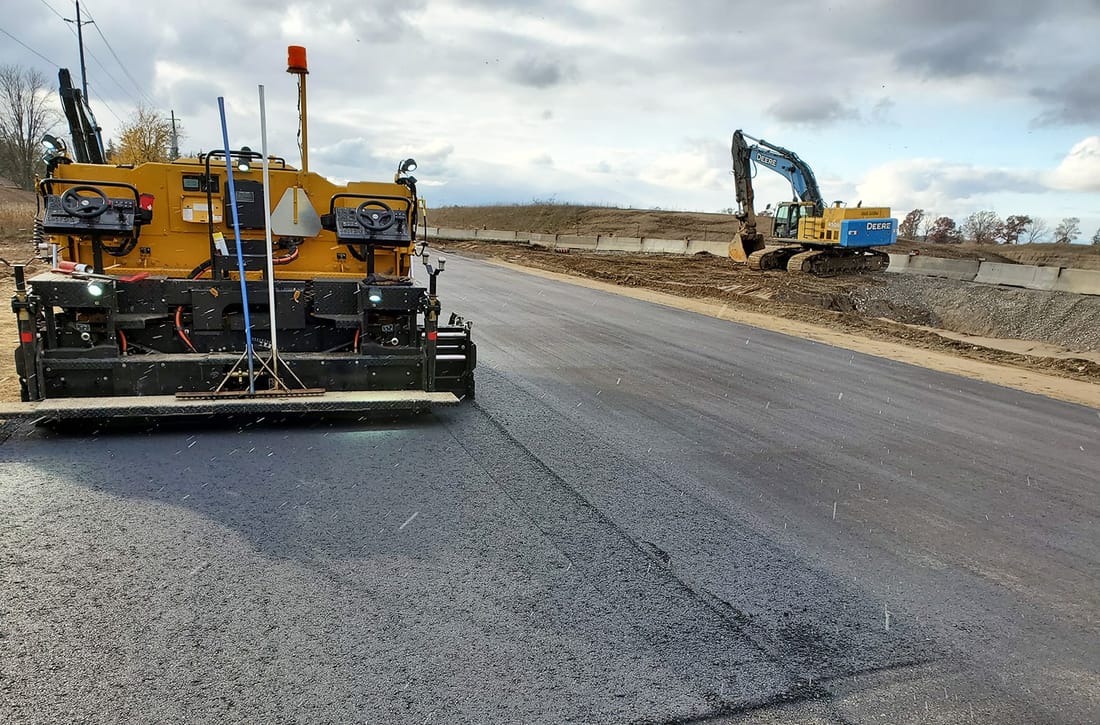
For municipal and heavy use roads, we often install asphalt in two or more lifts. The lower (binder) course provides structure, and the surface course handles the direct environment and traffic. We control mix temperature throughout placement, critical in hot Phoenix winds, and use steel drum and pneumatic rollers to achieve compaction before the mat cools.
5. Joints, tie-ins, and compaction testing
Longitudinal joints and tie-ins to existing pavement are where many roads start to fail. We cut clean vertical faces, tack coat thoroughly, and stagger joints where layout allows. Compaction is verified with density testing so the road meets or exceeds the project specification instead of relying on guesswork.
6. Striping and final inspection
Once the asphalt has cooled and cured enough to take paint, we install striping, symbols, and legends per city standards or your traffic control plan. Before we leave, we walk the entire stretch to check drainage, ensure all valves and manholes are accessible, and verify smooth riding quality.
Material and design choices that matter in the Phoenix climate
Not every road paving project in Phoenix needs the same asphalt mix or thickness. At Precision Asphalt Phoenix, we adjust materials based on how the surface will actually be used and what the local agency allows.
For neighborhood streets, we typically use a dense graded hot mix asphalt designed to resist raveling under heat and moderate traffic. On arterial roads and truck routes, we may specify a higher performance binder to combat rutting from slow moving heavy vehicles in summer temperatures. These decisions affect cost, but they also decide whether the road deforms in August.
Surface texture is another practical choice. A slightly coarser mix can improve skid resistance during monsoon storms, but may generate a bit more tire noise. In residential settings we often balance a smoother surface with safety by adjusting mix design and compaction approach, then confirm with the owner or agency how they want that tradeoff handled.
Thickness and base depth are driven by traffic loading and soil conditions. The same 3 inches of asphalt that works for a cul de sac will not work for a warehouse access road handling loaded 18 wheelers. We routinely propose alternate sections for review, for example a thicker asphalt section with thinner base versus the opposite, so owners and engineers can pick what best fits available budget and long term maintenance goals.
In some Phoenix alleys and low impact streets, chip seal or slurry surfacing over existing asphalt can extend life at lower cost. Where appropriate, we present those options along with full mill and overlay or full depth reconstruction, including pros, cons, and expected service life so you can make an informed decision rather than simply replacing everything.
We also account for reflective cracking from old joints. If the existing pavement has a grid of cracks, we may recommend fabric interlayers or more extensive removal instead of a simple overlay that will crack through in a couple of years.
Common road problems here and how we address them
Phoenix road paving faces a set of recurring issues that we design around from the start.
Heat related cracking and raveling
UV exposure and heat age asphalt quickly. We combat this by using mixes and binder grades appropriate for our temperature range, controlling compaction carefully, and discouraging overly thin surface courses. When we rehabilitate streets, we identify oxidized layers that must be milled off rather than buried, otherwise new asphalt loses bond and peels.
Poor drainage and ponding
Flat stretches in parts of Phoenix, Mesa, and Avondale often develop birdbaths where water stands after storms. During layout we verify crown and gutter line elevations instead of trusting old plans. Our crews adjust grades on site to ensure water finds an outlet. If existing inlet locations are insufficient, we will flag that early so owners can add drainage improvements before paving.
Utility trench settlement
Older streets with repeated utility cuts often show dips along trench lines. Our repair method usually involves full depth removal along the trench, recompacting the trench backfill, reestablishing base, then tying back into the surrounding pavement with proper sawcut edges and tack coat. A simple skin patch over a sunken trench is a short term fix that we advise against if you want the road to last.
Edge failures and shoulder breakdown
Where roads have no curb, the pavement edge can unravel from vehicle off tracking. We strengthen these edges with proper compaction right to the edge and, when possible, provide a compacted shoulder or wedge. For rural or industrial roads, we may widen slightly to create a more stable edge rather than matching an existing narrow strip that is already failing.
Traffic disruption and access
For streets serving businesses, schools, or neighborhoods, access is critical. We phase work so at least one lane or alternate access remains open as much as possible, schedule the noisiest work away from school drop off and pickup when we can, and coordinate with emergency services when closures affect their routes. Clear signage, door to door notices on affected streets, and honest timing updates reduce frustration for everyone.
Cost, scheduling, and what to expect when you hire us
Road paving in Phoenix can be a significant investment, so we are straightforward about what affects cost and schedule.
Key cost drivers
Costs are driven mostly by pavement thickness and area, base requirements, traffic control complexity, and how much existing material must be removed. A simple mill and overlay on a lightly traveled neighborhood street is very different from full depth reconstruction of a truck route with complex detours. We break out quantities and unit prices so you can see exactly where the budget is going, which helps when you need to adjust scope to fit funding.
Permits and coordination
For public streets or tie in work within city right of way, permits and traffic control plans are mandatory. Precision Asphalt Phoenix prepares or coordinates the MOT (Maintenance of Traffic) plans, works with the appropriate city, and schedules inspections. On private roads, we still follow safe traffic control practices so residents and customers can understand how to move through the area safely while work is in progress.
Typical project flow
After you contact us, we visit the site, gather measurements, and discuss how the road is used. Within a short timeframe we provide a written proposal that includes pavement section, materials, phasing concepts, and pricing. Once approved, we lock in a schedule that considers school calendars, monsoon season, and any utility conflicts you know about. During construction, you will have a single point of contact who can answer questions and make field decisions quickly.
What you should ask any road paving contractor
Before you hire anyone for road paving in Phoenix, ask about their experience with municipal specs, how they verify compaction, what mix designs they typically use for your road type, and how they handle joints and drainage. Ask to see recent projects with similar traffic loading. A low price without clear answers to those questions often means corners will be cut in the parts of the job you cannot see, which is where early failures usually start.
When you work with Precision Asphalt Phoenix, you get clear communication, detailed planning, and road paving that is built to match how your street is actually used today and how it will be used years from now.