Home › Parking Lot Paving & Installation
Create a great first impression with professional asphalt parking lot paving in Phoenix, AZ. We handle layout, grading, base work, and asphalt installation for new and existing commercial lots, built to carry daily traffic and intense heat.
Precision Asphalt Phoenix provides professional asphalt parking lot paving throughout Phoenix, AZ, Arizona and the surrounding area. Our licensed, insured crew delivers safe, clean, on-time work with a free estimate before anything begins. Call (602) 603-4424 or request your free quote.
Asphalt Parking Lot Paving in Phoenix, Built for Heat and Heavy Use
A parking lot in Phoenix has a harder job than in most cities. It has to live through 115° summers, monsoon downpours, and constant UV exposure without raveling or rutting. Precision Asphalt Phoenix designs and installs asphalt parking lots specifically for these conditions, not a generic national spec. We look at your traffic patterns, base soil, drainage, and shade, then build a section design that can take the heat and hold up for years.
Our crews are local, so we know how fast mix cools in the desert air, how to work within Phoenix dust control rules, and when to schedule paving so compaction hits the right temperatures. Whether you are replacing a failed lot or paving a new commercial site, we focus on getting the structure under the asphalt right first, then delivering clean lines, smooth transitions, and a finish that reflects well on your business the day you open it to customers.
Site Evaluation and Design for Your Parking Lot Layout
Effective asphalt parking lot paving starts with a detailed site evaluation. We walk the property with you, identify how drivers naturally enter, park, and exit, and factor in delivery trucks, accessible parking, and fire lane requirements. This planning step is where many low-bid projects cut corners, which later shows up as confusion in traffic flow or tight turning areas that ravel out quickly.
Precision Asphalt Phoenix checks existing elevations, subgrade conditions, and any signs of expansive soil or previous pavement failures. In Phoenix, older lots often suffer from dry, cracked subgrade and shallow base rock. If we see that, we recommend base repairs or full-depth reconstruction in those areas instead of just laying new asphalt over the problem. We also plan slopes so water drains to inlets or swales, not across walkways or back toward buildings.
We can assist with stall counts, one-way vs two-way drive aisles, and striping layouts that match City of Phoenix or surrounding municipality standards. For retail centers, we often suggest slightly wider drive aisles to reduce fender benders and improve traffic flow during peak hours. All of this is decided before equipment arrives, so you are not paying for last-minute changes in the field.
Step-by-Step Parking Lot Paving & Installation Process
A durable asphalt parking lot is the result of a controlled sequence of steps, each one checked before we move on to the next. Precision Asphalt Phoenix follows a clear process so you know what will happen on your property each day.
1. Demolition and removal: We mill or excavate the existing surface, whether it is failed asphalt, old concrete, or compacted dirt. All removed materials are hauled to appropriate recycling or disposal facilities, which helps keep your site clean and in compliance.
2. Subgrade preparation: We grade and shape the native soil, moisture condition it when needed, and compact it to the specified density. In Phoenix, we watch for overly dry, powdery soils that will settle later if not properly treated. If we encounter soft zones, we address them by undercutting and replacing with suitable material.
3. Aggregate base installation: We install and compact a base course of crushed material, typically 3/4 inch minus aggregate, to the designed thickness. For light car traffic, this may be 4 to 6 inches; for lots that see trash trucks or delivery semis, we increase base thickness or adjust the asphalt structure to carry those loads.
4. Proof rolling and fine grading: We run a loaded roller over the base to spot soft areas and correct them before paving. Once the base passes inspection, we perform a fine grade so the asphalt will land at the correct elevation and smoothness.
5. Asphalt paving: Hot mix asphalt is delivered at controlled temperatures from local plants. We use a paver machine for consistent mat thickness, then compact with a combination of steel and pneumatic rollers. In our climate, compaction timing is critical. We coordinate truck spacing and crew size so we can achieve target densities before the mix cools.
6. Transitions, joints, and edges: We pay particular attention to tie-ins at sidewalks, existing streets, ramps, and building entrances. Proper feathering and sealing of joints helps prevent early cracking where new asphalt meets old surfaces.
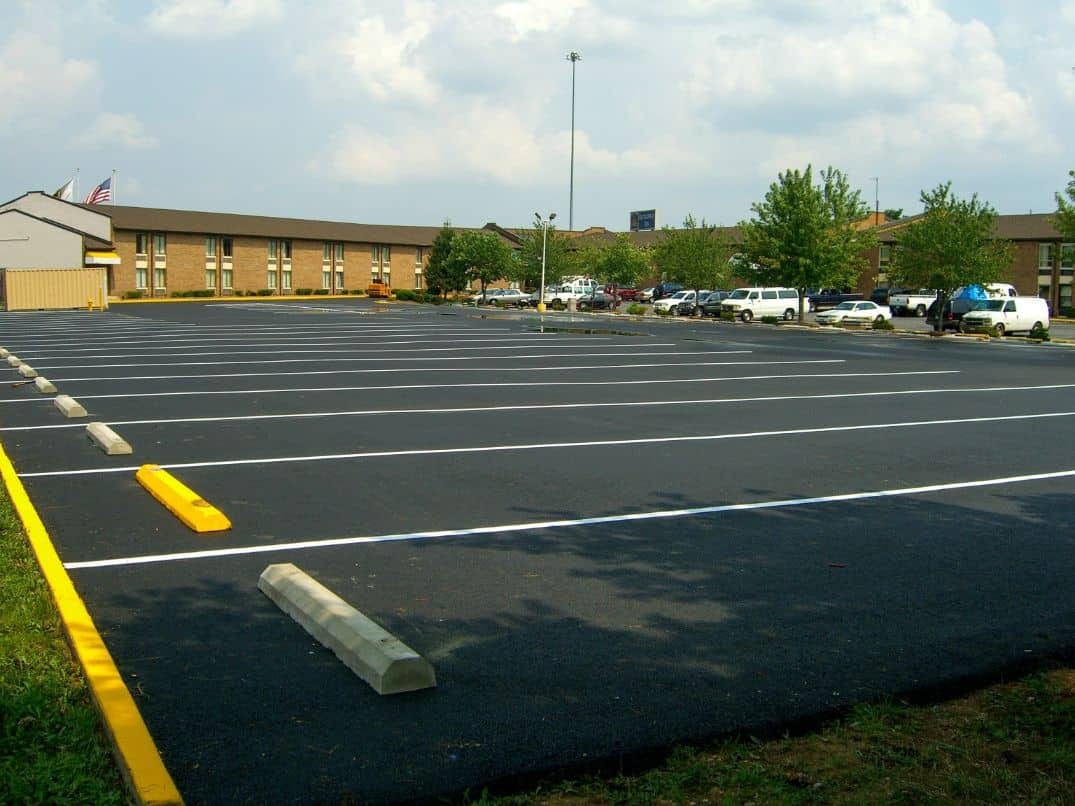
7. Striping and signage: After the asphalt has cooled and initial cure time has passed, we install pavement markings, wheel stops, and any required signage. This is where the layout design becomes real, so our striping crew follows the approved plan carefully.
Material Choices and Pavement Structure for Phoenix Conditions
Not all asphalt parking lot paving is the same. The mix design and pavement thickness should be tailored to your site and use, especially in a hot climate like Phoenix. Precision Asphalt Phoenix typically recommends a multi-layer approach rather than a thin single lift, since multiple layers allow for better compaction and long-term performance.
For most commercial parking lots with passenger vehicles, a common design might include 4 to 6 inches of aggregate base with 2 to 3 inches of hot mix asphalt in one or two lifts. For heavy-use drive lanes, dumpster pads, or areas where delivery trucks turn sharply, we may specify thicker asphalt or even a reinforced concrete pad inset within the asphalt lot to protect against rutting and shoving.
We work with local asphalt plants to select mixes that balance flexibility and rut resistance. In high-heat areas of your lot, such as dark corners with little shade, we lean toward mixes that maintain stability at elevated temperatures. If your lot must remain particularly quiet around residential neighbors or medical facilities, we can discuss mix and compaction options that minimize tire noise.
For clients interested in appearance and heat reduction, we can talk about sealcoat colors and reflective striping that reduce surface temperature a bit and improve visibility at night. While asphalt itself is dark, small material choices and layout decisions, such as lighter striping and strategic use of concrete near walkways, can improve comfort for pedestrians and drivers.
What Drives the Cost of Asphalt Parking Lot Paving
Understanding the cost drivers helps you compare bids fairly. Precision Asphalt Phoenix provides itemized proposals so you see where your investment goes, instead of one vague lump-sum number.
Key factors that affect price include:
• Site conditions: Poor or unstable subgrade, existing pavement failure, or lack of existing base material will increase cost because we must correct those issues before paving. A new build on properly prepared pad is less expensive per square foot than a full-depth reconstruction.
• Thickness and pavement section: More base rock and thicker asphalt lifts cost more up front but can be necessary for long-term performance, especially if you have frequent heavy trucks. We will show you options so you can decide where it makes sense to invest.
• Drainage requirements: Adding or adjusting catch basins, valley gutters, or underground drainage adds cost but can prevent major failures and liability issues later. Standing water is a real problem in Phoenix monsoon storms, so proper drainage is not an optional upgrade.
• Layout complexity and phasing: If your business must stay open, we can pave in phases so you always have some parking available. This takes more time and traffic control, which affects cost, but many clients find it worthwhile to avoid full closure.
We walk you through these choices before work begins, explain the tradeoffs, and help you select a design that fits both your budget and the demands of your property.
Common Parking Lot Problems in Phoenix and How We Prevent Them
Phoenix parking lots tend to fail in predictable ways: surface cracking from UV exposure, rutting in drive lanes, edge breakdown where asphalt meets decomposed granite, and alligator cracking around dumpsters and loading areas. Precision Asphalt Phoenix looks for these issues during the planning stage so your new lot does not repeat the same mistakes.
To combat cracking, we specify adequate asphalt thickness and proper compaction, and we recommend a maintenance schedule that includes timely sealcoating and crack sealing. UV and heat accelerate oxidation of the asphalt binder here more than in cooler climates, so staying ahead of maintenance is crucial.
Rutting and shoving usually show up where heavy vehicles stop, turn, or back up repeatedly. We address this by thickening the pavement section in those specific areas, adjusting the base design, or adding concrete pads in front of dumpsters and at loading docks. This targeted reinforcement costs less than overbuilding the entire lot, yet it greatly extends the life of the most stressed sections.
Edge failures are common where asphalt meets unconfined soil or landscape rock. We use proper edge compaction and, where appropriate, concrete curbing to keep the edge supported. For lots adjacent to landscaped areas, we also consider how irrigation water might undermine the edge and adjust design or drainage to prevent it.
By focusing on these local patterns of failure and building around them, we reduce your long-term repair costs and help keep your lot looking professional longer.
What to Expect When You Hire Precision Asphalt Phoenix
Commercial paving work affects your customers, tenants, and deliveries, so clear communication is as important as good compaction. When you choose Precision Asphalt Phoenix for asphalt parking lot paving, we assign a project manager as your single point of contact from planning through striping.
Before work begins, we provide a schedule that outlines demolition, base work, paving, and striping days, along with any curing time when traffic must be restricted. We coordinate with you on business hours, peak customer times, and delivery schedules, then phase the work to minimize disruption. For multi-tenant centers, we can provide notices you can share with occupants so everyone knows what to expect.
On paving days, our crews handle traffic control and safe access routes. We post and enforce closure times so the asphalt has time to cool and gain initial strength before vehicles drive on it. For most lots, light vehicle traffic can return within 24 hours, while heavy trucks may be delayed slightly longer depending on conditions.
Once work is complete, we walk the site with you, review the finished layout, and discuss a realistic maintenance plan for Phoenix conditions. This often includes suggested timelines for first sealcoat, crack inspections, and repainting of lines. Our goal is not just to install a new asphalt parking lot, but to give you a clear roadmap to keep it performing well for many years.