Home › Asphalt Sealcoating & Crack Filling
Shield your driveway from sun, oil, and water with professional asphalt sealcoating in Phoenix, AZ. Our team cleans the surface, fills cracks, and applies a uniform sealer coat that deepens color, resists damage, and extends the life of your pavement.
Precision Asphalt Phoenix provides professional asphalt sealcoating throughout Phoenix, AZ, Arizona and the surrounding area. Our licensed, insured crew delivers safe, clean, on-time work with a free estimate before anything begins. Call (602) 603-4424 or request your free quote.
Protecting Your Asphalt In Phoenix Heat
In Phoenix, asphalt does not fail because of snow and ice. It fails because of brutal sun, high surface temperatures, and sudden monsoon downpours. That combination dries out the oil in the pavement, makes it brittle, and opens the door for water to get into small cracks. Once water is under the surface, the base starts to weaken and potholes follow.
Asphalt sealcoating is a protective layer that sits on top of your existing pavement. It shields the asphalt from UV rays and oil spills, slows down oxidation, and helps shed water. Crack filling targets the weak spots first. By sealing those openings, you keep water out of the base and stop small issues from turning into expensive tear out and replacement.
Precision Asphalt Phoenix focuses on what actually works in our climate, not just what looks good on day one. We select materials and application methods that stand up to 115 degree parking lots and hot tires, and we schedule work so the coating cures properly in desert conditions. That way you get real life added to your pavement, not just a temporary black coat.
Our Step by Step Sealcoating Process
A long lasting sealcoat job in Phoenix starts with surface prep. We begin with a thorough cleaning using power blowers and steel brooms to remove sand, dust, and loose stone. On heavily soiled areas, like dumpster pads or drive lanes, we use hot detergent degreasers to break down oil and transmission fluid so the sealer can bond. Any standing vegetation in cracks or along edges is removed so roots do not keep lifting the pavement.
Next we address structural issues before sealing. Larger cracks are cleaned and filled (more on that in the next section), minor potholes are cut out and patched if needed, and raveled (crumbly) edges are squared up. Putting sealer over active failures only hides problems for a few months, so Precision Asphalt Phoenix fixes what needs fixing first.
Once the surface is clean and sound, we tape and shield sensitive areas like drains, concrete sidewalks, curbs, and garage door bottoms. For most commercial lots we use a blended coal tar or asphalt emulsion sealer that is fortified with sand and latex additives for traction and durability. In high heat areas, such as south facing parking areas, we typically use a heavier sand load to reduce scuffing from tight turning vehicles.
Application is done either by spray, by squeegee, or a combination of both. Spraying allows an even coat on large open areas, while squeegee application works better on tight spaces and heavily oxidized surfaces where we want to work material into the pores. In Phoenix we almost always apply two coats, with proper dry time in between, to stand up to the sun. We also check humidity and surface temperature. On extremely hot afternoons, we may shift work to early morning or evening so the sealer does not skin over too fast and lose bond.
After the final coat, we inspect for thin spots, especially near drains and entrances where traffic is highest. Once cured, we return for re striping and marking so your traffic flow and ADA compliance are correct and clearly visible.
How We Handle Crack Filling In Phoenix
Cracks in Phoenix asphalt tend to start as hairlines from thermal movement, then widen as the surface dries out and traffic flexes the pavement. If those cracks are left open, monsoon rains force water through the surface and into the base. The base softens, subgrade washes out, and you end up with dips, alligator cracking, and eventually potholes.
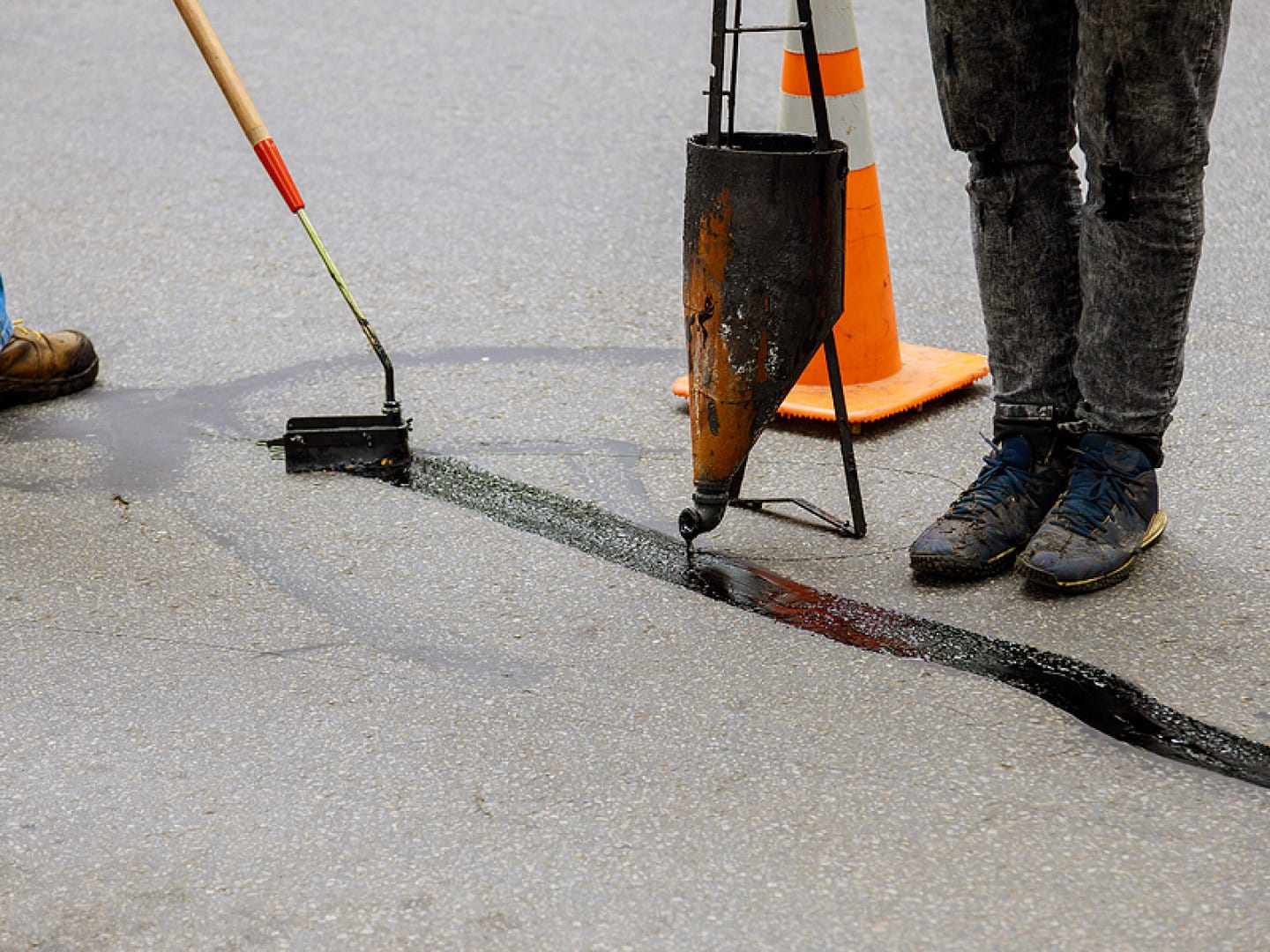
Precision Asphalt Phoenix uses different approaches depending on the crack type. For working cracks (those that open and close seasonally) we typically use hot applied rubberized crack sealant. We first clean the crack with high pressure air and, if needed, a mechanical router to square up the edges and get rid of loose material. Routing is not always required for smaller parking lot cracks, but on larger, moving cracks it helps the sealant sit deeper and last longer.
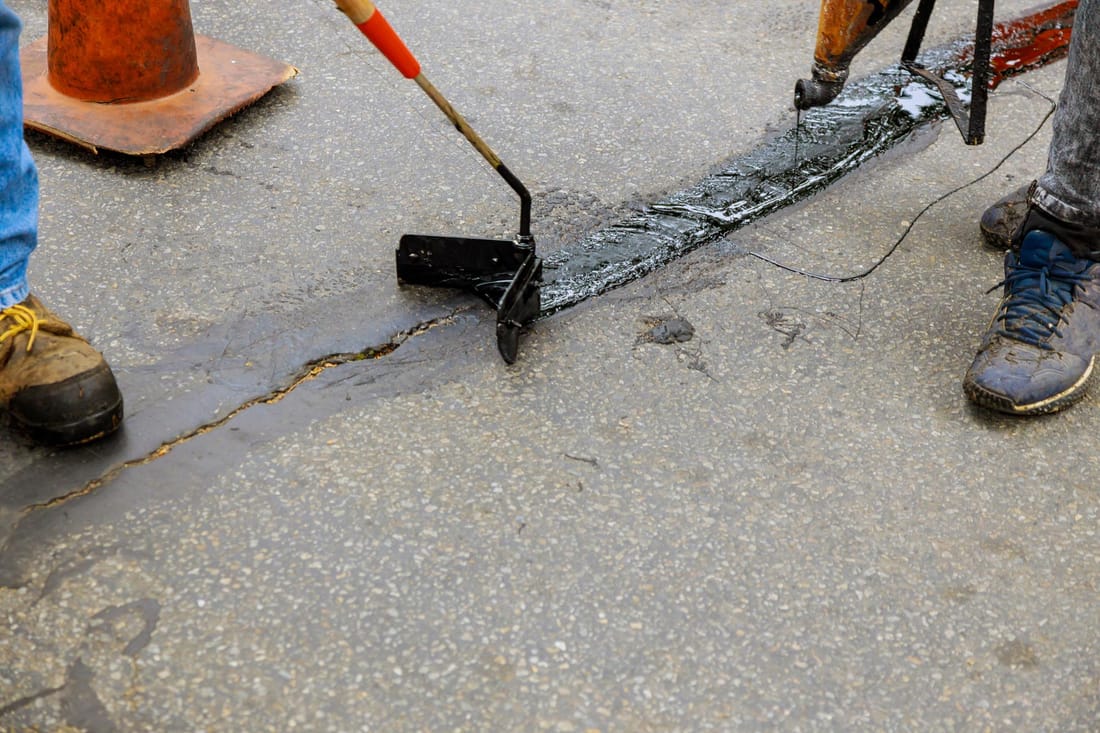
Once clean, we heat the rubber sealant in a kettle to the manufacturer specified temperature, then apply it directly into the crack so it slightly overfills the surface. A squeegee or V shaped tool is used to create a smooth band over the crack. That band is what keeps water on top instead of letting it run inside. In high visibility areas, we keep bands neat and narrow so the repair does not create a trip edge.
For non working, wide cracks and small voids, we may use a cold pour crack filler or a hot pour, depending on the depth and traffic type. On residential driveways where appearance matters more than heavy truck resistance, a properly installed cold pour can be a good value. On commercial drive lanes and access roads, we lean toward hot rubber for flexibility and longevity.
Timing in Phoenix is important. Crack filling should be done when the pavement is dry and the crack is at a normal width, not at its widest point in peak afternoon heat. This helps avoid excessive stretching and tearing later. We also coordinate crack filling and sealcoating so that the crack seal has time to cool and set, which helps the sealer coat evenly and prevents tracking.
What Affects Cost And Scheduling In Phoenix
Two asphalt sealcoating jobs can look similar from the street but have very different costs. Precision Asphalt Phoenix walks each site and measures, but we also look for conditions that will change how much labor and material are needed.
Key cost drivers include the total square footage, how oxidized the asphalt is, and how many cracks and repairs are present. A newer lot with few cracks might only need crack sealing on the main joints and a standard two coat seal. An older gray surface with alligator cracking, soft spots, and oil saturated areas will require more patching, degreasing, and thicker sealer to get meaningful results.
Access also affects price and timing. Lots with tight turns, multiple islands, or heavy landscaping require more hand work and edging. In multifamily or busy retail properties, we may need to phase the work to keep sections open for residents and customers. That can involve more mobilization and traffic control, which adds to cost.
Phoenix weather is another factor. We try to avoid sealcoating during forecasted monsoon storms or on extremely windy days when dust can contaminate the fresh surface. Ideal conditions are warm, dry days with manageable wind. During peak summer, we often recommend early morning or night work so the sealer cures correctly and you have less downtime.
You will also choose between material options. Coal tar based sealers resist gasoline and oil very well but have a stronger odor during application. Asphalt emulsion products are lower odor and often preferred in residential settings. We explain the trade offs, expected service life, and cost difference so you can decide what fits your property and budget.
Finally, line striping and ADA upgrades can be bundled into the project. If your Phoenix property needs updated handicap stalls, fresh fire lane markings, or new directional arrows, it is more cost effective to do it immediately after sealcoating while the layout is open and visible.
How Often To Sealcoat And What To Ask Before Hiring
In our climate, most commercial and residential asphalt in Phoenix benefits from sealcoating every 3 to 4 years, depending on traffic and exposure. High traffic convenience stores or drive thrus that see a lot of turning and fuel spills may need it slightly more often. Light use HOA streets or private drives, especially if shaded part of the day, can sometimes stretch the cycle a little longer.
You do not want to seal too often. Stacking coat after coat every 1 to 2 years can trap moisture, create a slick surface, and lead to peeling. A good rule is to watch for the asphalt turning light gray, surface fines coming loose, and small cracks starting to open. That is when sealcoating and crack filling can still prevent bigger structural damage.
Before you hire any contractor for asphalt sealcoating in Phoenix, ask specific questions. What material are they using, and is it specified for commercial lots or just residential drives? Will they apply one coat or two, and at what coverage rate per square yard? How will they handle oil spots, existing crack seal, and soft areas? Vague answers usually mean a thin application that will not last.
Also ask how they will manage traffic and access. Precision Asphalt Phoenix provides a simple phasing plan so you know which areas are closed on which days, and we use clear barricades and signage so drivers do not accidentally drive on uncured sealer. For night work, we bring adequate lighting so the crew can maintain quality.
Local experience matters in Phoenix because material behavior, cure times, and the way pavements age here are different from cooler, wetter markets. We have seen what fails after one or two summers, and we adjust methods accordingly. By combining crack filling, thoughtful prep, and climate appropriate sealcoating, we help you extend the life of your asphalt and avoid premature replacement.