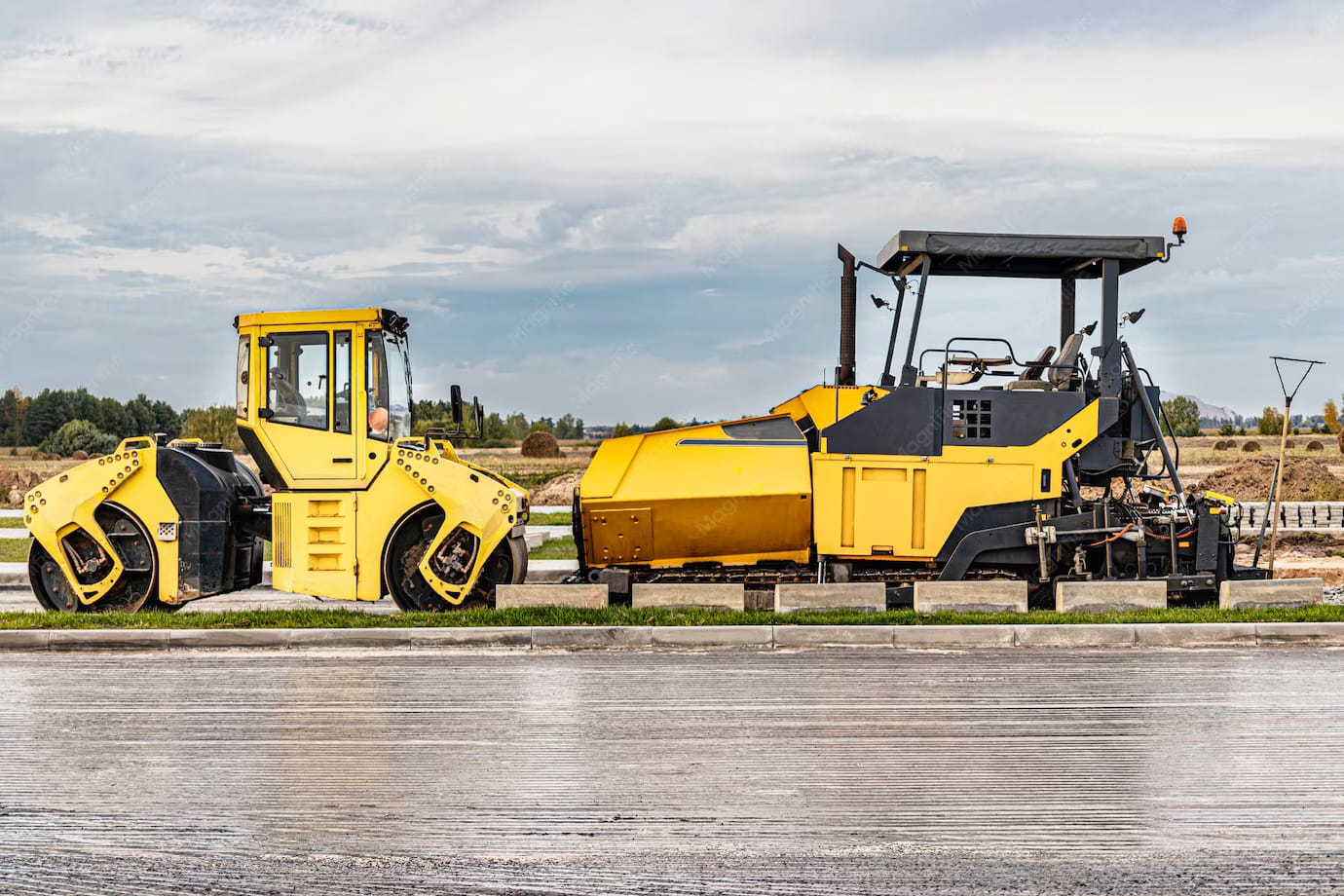
Home › Industrial and Heavy-Duty Asphalt Paving
Handle heavy loads and constant traffic with industrial asphalt paving in Phoenix, AZ. We design and install thicker asphalt sections with strong bases for truck yards, loading docks, warehouses, and equipment pads.
Precision Asphalt Phoenix provides professional industrial asphalt paving throughout Phoenix, AZ, Arizona and the surrounding area. Our licensed, insured crew delivers safe, clean, on-time work with a free estimate before anything begins. Call (602) 603-4424 or request your free quote.
Industrial asphalt paving that holds up to Phoenix abuse
Industrial and heavy-duty asphalt in Phoenix is a different animal than a small parking lot or driveway. Forklifts, semi-trucks, container stacks, constant loading and unloading, and 115-degree summer heat will quickly destroy a light-duty design. At Precision Asphalt Phoenix, we start every industrial asphalt paving project by asking one question: exactly what is going to drive, sit, and turn on this surface every day?
We walk the site with you and map out traffic flow, truck entry points, turning radii, staging areas, loading docks, dumpster pads, and any spots where trucks will idle or park overnight. Those are your high-stress zones and they need heavier sections and different mix designs than the rest of the site. Instead of giving you a single generic pavement thickness, we typically create two or three pavement “sections” with different depths, base requirements, and mixes tailored to how the area is used.
Because Phoenix soils can vary from hard caliche to loose imported fill within a single property, we also pay close attention to what is under your asphalt. We dig test holes, probe soft spots, check drainage patterns, and look for existing utilities or abandoned concrete that might affect the design. All of this feeds into a pavement plan that is specific to your operation, not a copy of a strip mall parking lot spec.
How industrial asphalt paving is actually built
Once the design is set, industrial asphalt paving follows a disciplined sequence. First, we demolish and remove any failed asphalt or concrete, then proof roll the exposed subgrade with a loaded truck or roller. If the ground deflects or pumps under the load, that tells us we need undercutting or stabilization rather than just paving over a problem.
On stable sites we typically install 4 to 8 inches of compacted aggregate base for industrial work in Phoenix, thicker in heavy container yards or fuel depots. The base is placed in multiple lifts, each compacted separately to at least 95 percent density, and we spot check it with a nuclear gauge so you are not left with soft pockets that will rut in a year. In some high-load areas, like dock approaches where truck tandems stop and start, we may recommend a cement-treated base or a full-depth asphalt section instead of standard aggregate.
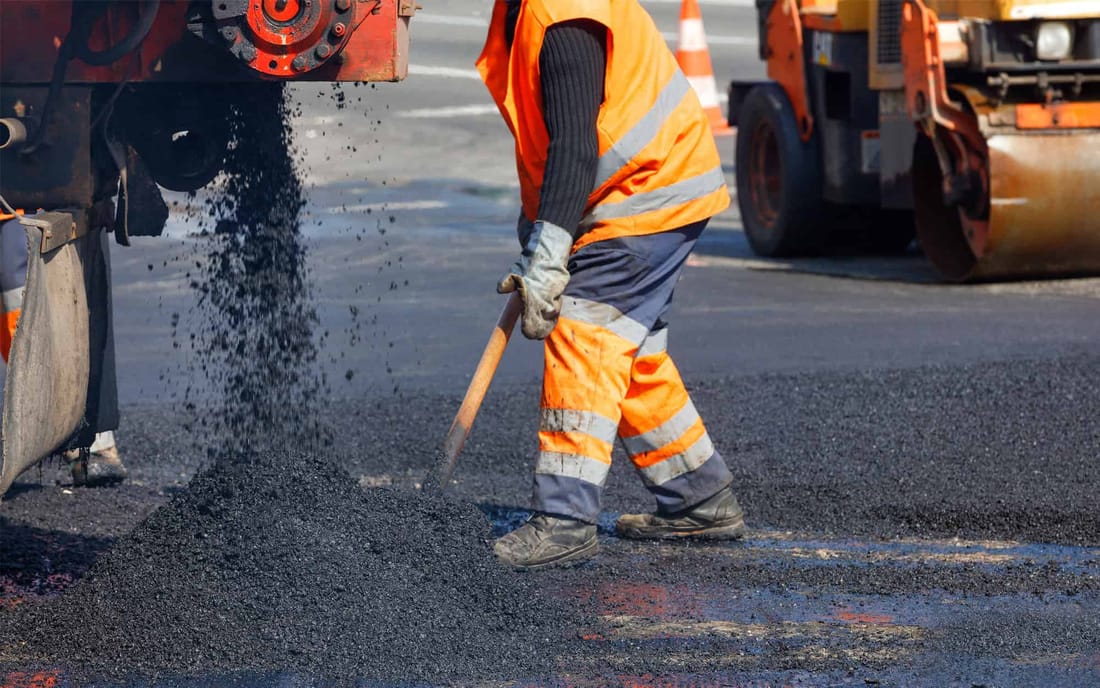
Asphalt itself is usually placed in two or more lifts for heavy-duty applications. For example, we might install a 3-inch intermediate or binder course, then a 2-inch surface course designed for rut resistance. Mixes for industrial asphalt paving in Phoenix often use harder performance-graded binders to deal with our extreme pavement temperatures and heavy truck loads. Rakes and pavers shape the mat, then steel drum and pneumatic rollers compact the surface to lock the aggregate together and seal out air and water. We constantly monitor temperatures, roller patterns, and joint locations to avoid cold joints and weak seams that can unravel under industrial traffic.
Material options and design choices that matter in Phoenix
Not every black surface is created equal. For industrial asphalt paving, your mix design and section thickness matter more than paint lines or curb style. Here are some of the choices we walk through on Phoenix projects:
• Mix type: For loading zones and truck lanes, we typically recommend a coarse-graded Superpave mix with a stiffer binder that resists shoving and rutting when trucks brake or turn. In lighter-duty employee parking areas, we might use a finer mix for a smoother appearance and quieter ride.
• Thickness and sectioning: A truck court that sees 10 loaded semis a day can get by with less pavement than a distribution hub that sees 300 per day with tight turning movements. We use traffic loading estimates (ESALs) and your specific operations to size the pavement layers. It is common to see 5 to 7 inches of asphalt in critical areas in Phoenix, compared to 3 to 4 inches for general parking.
• Reinforcement and transitions: Where asphalt meets concrete dock walls, trench drains, or rails, we pay special attention to joint details. We may use thicker edge sections, sawcut transitions, and, in some cases, a small concrete apron at the dock face to prevent asphalt from breaking off under repeated trailer impacts.
• Surface texture and drainage: Phoenix monsoon storms can turn a flat yard into a shallow lake. We build slope into the pavement, even when grades are tight, and use slightly coarser surface mixes in industrial areas to maintain traction when oils and water are present. On fuel or chemical handling sites, we coordinate with your environmental consultant so the paving layout works with containment and treatment requirements.
These design decisions directly impact how long your new industrial pavement will last before needing mill and overlay work, and they are a big part of why two quotes that look similar on paper can perform very differently in our climate.
What affects cost and how to make smart budget choices
Industrial asphalt paving is a capital expense, so it helps to understand where the dollars really go. The biggest cost drivers are thickness, base preparation, and access. Thicker asphalt and base naturally cost more in materials and trucking, but the right thickness can double or triple the service life compared to an under-designed section that starts rutting in a few summers.
Base work is where surprises often show up. If we discover saturated or unsuitable soil under an existing lot, we will present options: remove and replace a defined depth, treat in place with cement or lime, or in some limited cases bridge the area with geogrid and extra base. Each option has different upfront and long-term costs. Precision Asphalt Phoenix will lay those out clearly so you can decide whether you want a 5-year patch job or a 20-year solution.
Access, staging, and phasing also affect price. If we can bring in trucks directly and pave large areas at once, your cost per square foot drops. Tight sites, night-only work, or complex phasing around active operations increase labor and traffic control time. We regularly stage work so your trucks, forklifts, or production lines can keep moving, but we will be honest with you about what that phasing adds to the budget.
If you are working with a fixed budget, we can help prioritize. For example, you might choose full-depth reconstruction in the worst truck lanes and a structural overlay with localized repairs in lower-stress parking zones. That way, the areas that fail first under heavy traffic are truly rebuilt, while you still improve the rest of the site within your budget.
Planning, timing, and long-term care for Phoenix industrial pavements
Phoenix heat changes how we schedule and care for industrial asphalt. In peak summer, pavement surface temperatures can exceed 160 degrees, which affects compaction and cooling times. For critical heavy-duty sections, Precision Asphalt Phoenix often recommends early morning or night paving between May and September. This keeps mix temperatures in the right range and reduces tracking of fresh asphalt by trucks or forklifts.
The best windows for major reconstruction are typically October through April, when temperatures are moderate and we can work full daylight shifts without fighting extreme heat. If your operation is seasonal, we can align major work with your slowest months and then plan lighter maintenance such as crack sealing and patching during busier periods.
Once your industrial asphalt paving is in place, a maintenance plan is the cheapest insurance you can buy. We recommend regular inspections of high-stress areas like dock approaches, dumpster pads, and sharp truck turns. Catching early raveling, rutting, or oil damage means we can mill and replace small areas before they spread. Timely crack sealing keeps water out of the base, which is especially important in Phoenix where a sudden monsoon storm can exploit even a small defect.
Sealcoating on truly heavy-duty truck lanes must be used carefully, since some industrial operations involve turning forklifts or steel-wheeled equipment that can scuff soft sealers. We will be upfront about where sealcoat adds value, such as employee parking, and where more robust surface treatments or overlays are a better choice. Our goal is to match the maintenance strategy to the way your site actually works, so your asphalt supports your business instead of interrupting it.